A Guide to Interfacing Diffusion Pumps with a New Coating Chamber
A Guide to Interfacing Diffusion Pumps with a New Coating Chamber
Integrating an existing diffusion pump with a new or repurposed vacuum coating chamber is a common task in many R&D and manufacturing environments. To ensure success, this process requires more than just bolting parts together. Proper integration involves a systematic review of mechanical interfaces, backing pump compatibility, thermal management, and control systems to achieve the desired vacuum level and prevent costly contamination or system downtime. This guide outlines the critical engineering choices for a successful retrofit.
Understanding the Core Challenge of Integration
Connecting a diffusion pump to a vacuum coating chamber is more than a simple flange-to-flange connection. The chamber must be evaluated as part of the full pumping system so the diffusion pump, high-vacuum valve, foreline, backing pump, seals, and controls all work together safely and efficiently. The goal is to create a clean, leak-tight, high-conductance connection that allows the diffusion pump to reach the required operating pressure without introducing contamination, mechanical stress, or unnecessary pump-down limitations.
Before installing the diffusion pump, inspect the chamber port and surrounding connection area carefully. Check for damaged flange faces, warped sealing surfaces, worn O-ring grooves, contamination, or interior scratches that could trap gases and create virtual leaks. A helium leak check should be performed before final integration to confirm the chamber can support high-vacuum operation. For demanding high-vacuum coating work, the target leak rate is typically less than 10⁻⁹ mbar ⋅ l ⋅ s⁻¹.
Key initial chamber considerations include:
Vacuum Integrity: Confirm the chamber is structurally sound, clean, and capable of holding the required vacuum level before connecting the diffusion pump. Pump Port Compatibility: Verify the chamber port size, flange type, bolt pattern, and seal style match the diffusion pump or the required adapter flange. Conductance and Flow Path: Keep the connection between the chamber and diffusion pump as short, straight, and unrestricted as possible to maximize pumping efficiency. In-Chamber Hardware: Account for sources, shields, heaters, fixtures, and other internal components that may increase surface area and outgassing load. The diffusion pump and backing system must be sized to handle that added load.
Mechanical Integration: Flanges, Seals, and Alignment
The most direct interface between your diffusion pump and the chamber is the mechanical connection. Mismatched flanges, improper seals, or poor alignment can introduce leaks, stress components, and ultimately prevent your system from reaching its target pressure. Getting this right is fundamental.
Most large diffusion pumps use ISO (Large Flange / LF) flanges, while chambers can vary. It's critical to ensure you have the correct adapter flange if the port on your chamber is a different standard, such as ConFlat (CF). While adapters are readily available, each additional flange joint is another potential leak point that requires careful assembly.
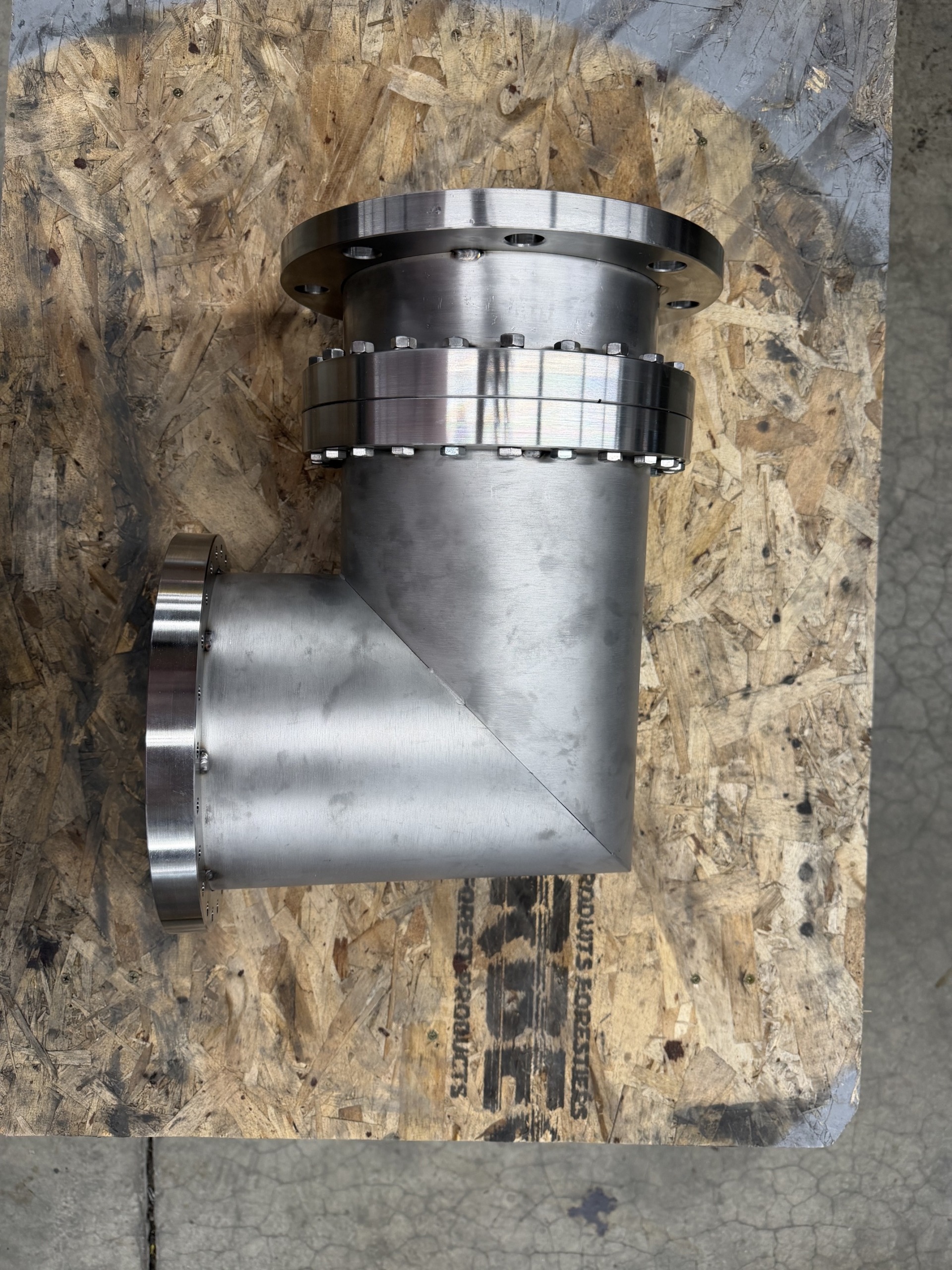
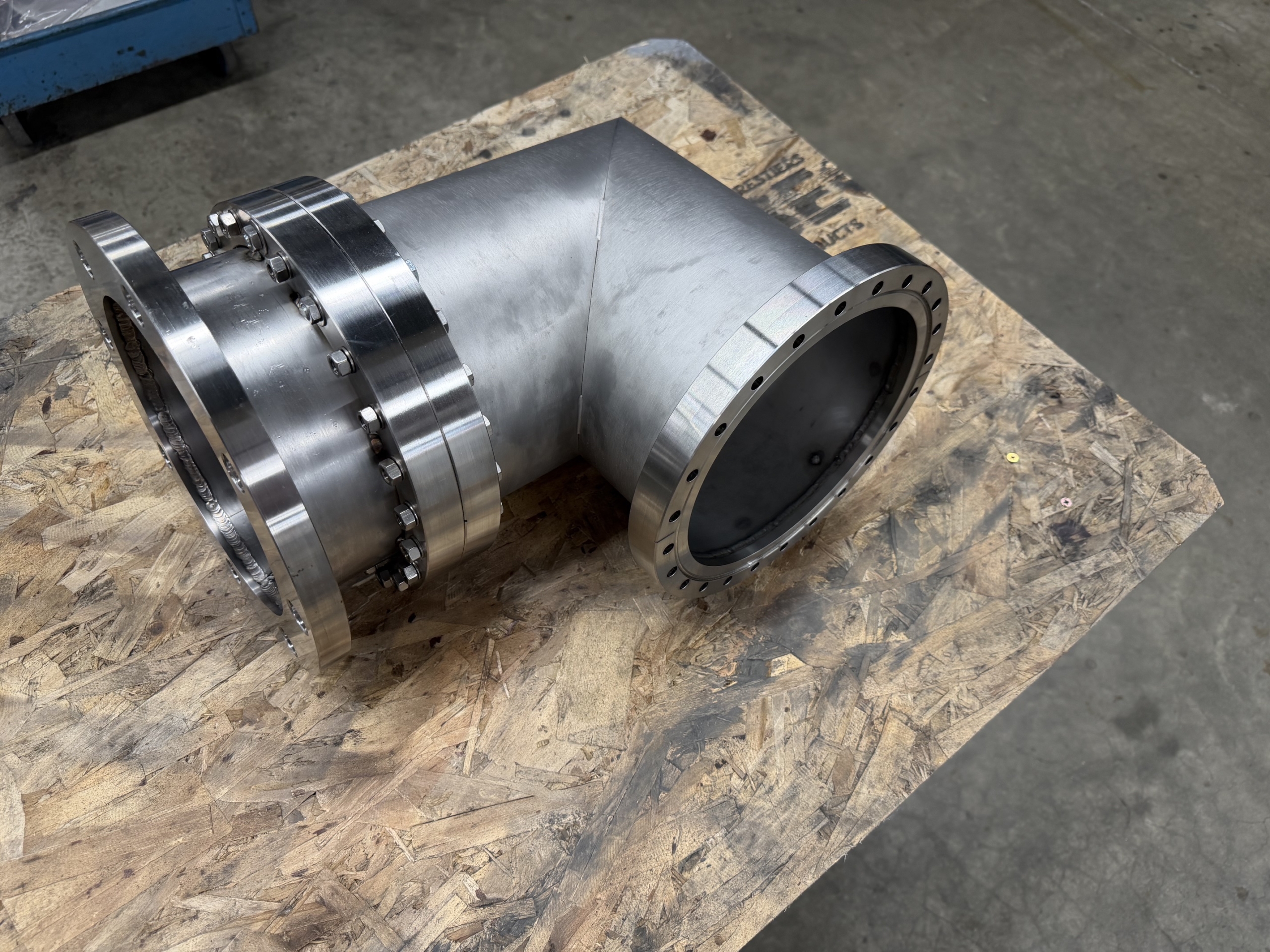
Field example: These flange components illustrate why bolt pattern, sealing surface condition, alignment, and support must be checked before final installation. Even small fitment issues at this connection can create leaks, reduce conductance, or place stress on the chamber port.
Sealing is paramount. For high-vacuum (HV) systems, the choice of O-ring material is critical. While Viton is common, it has a higher outgassing rate and permeation compared to metal seals. If your new chamber is intended for ultra-high vacuum (UHV) applications, you must upgrade from elastomer O-rings to metal seals like ConFlat (CF). This single change dramatically reduces outgassing and allows the system to achieve lower ultimate pressures. Be sure to follow proper bolt-tightening procedures in a star pattern to ensure the knife-edge makes a perfect seal.
Don't overlook physical alignment and support. Diffusion pumps are heavy and must be properly supported to avoid putting mechanical stress on the chamber port, the pump throat, or any connecting high-vacuum valves. Use a sturdy frame and leveling feet to ensure the pump is perfectly aligned before tightening the flange bolts. Misalignment can cause uneven sealing and create a persistent, hard-to-find leak. Our team specializes in designing and fabricating these types of custom engineering services.

The Pumping Stack: Backing and Foreline Considerations
A diffusion pump cannot exhaust directly to atmosphere; it requires a backing (or roughing) pump to maintain a low pressure at its outlet, known as the foreline pressure. The performance of your diffusion pump is directly tied to the performance of its backing pump. When interfacing with a new chamber, it's the perfect time to evaluate and potentially upgrade your entire pumping stack.
Older systems often used oil-sealed rotary vane pumps as backing pumps. While effective, they are a known source of hydrocarbon contamination. If oil vapor backstreams from the backing pump into the diffusion pump, it will be cracked by the hot oil jets and can contaminate your entire vacuum chamber. Modern alternatives offer a cleaner solution.
Consider these upgrades for your backing pump system:
- Dry Scroll or Screw Pumps: Replacing an old rotary vane pump with a hermetically sealed dry pump eliminates the primary source of hydrocarbon vapor in your system. This is one of the most effective upgrades for improving process cleanliness.
- Roots Boosters: For very large chambers or processes with high gas loads, adding a Roots blower between the diffusion pump and the backing pump can significantly improve pump-down times.
- Foreline Traps: If a dry pump isn't in the budget, adding a molecular sieve or an actively cooled trap to the foreline can help prevent oil backstreaming from a rotary vane pump.
Proper foreline design is also crucial. The line should be as short and wide as possible to maximize conductance, and it must be rated to handle the required vacuum level and be leak-free.
Thermal and Power Management for Diffusion Pumps
Diffusion pumps operate by boiling a special fluid and directing the vapor through a series of jet assemblies. This process requires precise thermal management, including both a powerful heater and an efficient cooling system. Integrating these subsystems into your new chamber setup is a critical step.
Your control system must supply the correct voltage and current to the diffusion pump's boiler. The power should be interlocked with sensors to prevent overheating. The pump should never be heated until a sufficient rough vacuum is achieved, and it should never be vented to atmosphere while hot, as this will oxidize the pump fluid.
Simultaneously, the body of the diffusion pump must be actively cooled, typically with water. The cooling lines must be properly connected and have a reliable flow rate. Many system failures are caused by an interruption in cooling water.
Key integration points for thermal management include:
- Power Control: Use a dedicated circuit and controller for the pump's heater, interlocked with vacuum gauges and temperature sensors.
- Cooling Water Flow: Integrate a flow switch into the cooling line. This switch should be interlocked with the heater, automatically cutting power if water flow stops, preventing catastrophic pump failure.
- System-Wide Cooling: Consider how the pump's cooling integrates with other system needs, such as water-cooled chamber shielding or deposition sources. Ensure your chiller has adequate capacity for all components. For more on this, see these thermal management strategies.
Modern Alternatives: When to Replace Your Diffusion Pump
While diffusion pumps are reliable and cost-effective workhorses for high vacuum, it's important to consider modern alternatives, especially when undertaking a major system retrofit. Depending on your process requirements, replacing an old diffusion pump with a turbomolecular pump (TMP) may be a better long-term solution.
Diffusion pumps, even when perfectly operated, present a risk of oil backstreaming into the process chamber. For sensitive applications like semiconductor manufacturing or high-purity optical coatings, this risk is often unacceptable. TMPs, on the other hand, are completely dry high-vacuum pumps that operate mechanically, like a jet turbine, to move gas molecules.
Here's a comparison:
- Cleanliness: TMPs are inherently cleaner, with zero risk of oil vapor backstreaming. This is their single biggest advantage.
- Pump-Down Time: TMPs often provide faster pump-down cycles because they can be started sooner and do not require a lengthy warm-up or cool-down period.
- Operating Pressure: Diffusion pumps can handle higher gas loads at higher pressures, making them suitable for some industrial PVD processes. TMPs operate best at lower pressures.
- Cost & Maintenance: Diffusion pumps have lower initial costs and simpler maintenance (oil changes). TMPs have a higher initial cost and require specialized bearing service every few years.
If your new process demands the highest level of cleanliness or rapid cycling, upgrading to one of our modern turbomolecular pumps is a smart investment. However, for many large-scale industrial applications, a well-maintained diffusion pump remains a highly effective and economical choice.
Process Control and Automation Integration
Finally, the diffusion pump must be fully integrated into the chamber's master control system. A modern remanufactured system will use a PLC or PC-based interface to automate sequencing and provide safety interlocks. Your diffusion pump is not a stand-alone device; it's a critical component that must communicate with the rest of the system.
Automated control sequences are vital for the proper operation of a diffusion pump. The controller must manage the pump-down cycle, ensuring the correct valves open and close in the right order. For example, the high-vacuum valve between the pump and chamber should never open until the pump has reached its operational state.
Essential interlocks for a diffusion pump include:
- Foreline Pressure: The heater should not activate until the foreline pressure, measured by a gauge, is below a setpoint (e.g., <100 mTorr). If foreline pressure rises too high during operation, the heater should shut off.
- Cooling Water Flow: A flow switch must confirm adequate water flow before the heater turns on and must shut it down if flow is interrupted.
- Pump Temperature: A sensor on the pump casing can prevent overheating by cutting power if a maximum temperature is exceeded.
- Chamber Pressure: The high-vacuum valve should be interlocked with a high-vacuum gauge to prevent it from opening at or near atmospheric pressure.
By integrating these functions into a central PLC, you create a safe, reliable, and repeatable process. This is a core part of our vacuum system upgrades and retrofits service, ensuring all components work together seamlessly.
Whether you're reusing a trusted diffusion pump or considering an upgrade, successful integration with a new vacuum chamber requires careful planning across mechanical, thermal, and control systems. By following these engineering principles, you can ensure your retrofitted system achieves its performance goals for years to come.
Ready to upgrade or retrofit your vacuum system? Contact the experts at Yeagle Technology today to discuss your project requirements.
FAQs About Vacuum Pump and Chamber Integration
What is the main challenge when connecting a diffusion pump to a new chamber?
The primary challenge is ensuring a perfect, leak-free mechanical and vacuum seal. This involves matching flange types (or using proper adapters), selecting the right seal material (elastomer vs. metal), and ensuring precise physical alignment to avoid stress on the connection, which could create a leak.
Why is the backing pump so important for a diffusion pump?
A diffusion pump can only operate when the pressure at its outlet (the foreline) is kept low. A backing pump, such as a rotary vane or dry scroll pump, provides this condition. The cleanliness and performance of the backing pump directly impact the diffusion pump's efficiency and the ultimate cleanliness of the entire vacuum system.
Can I use my old O-rings on a high-vacuum system?
It is strongly discouraged. While elastomer O-rings (like Viton) are used in some high-vacuum applications, they degrade over time, have higher outgassing rates than metal, and can cause contamination. For UHV or cleaner processes, you should always upgrade to metal seals like those on ConFlat (CF) flanges.
Should I upgrade my diffusion pump to a turbomolecular pump?
It depends on your application. If your process is extremely sensitive to hydrocarbon contamination (e.g., optics, semiconductors) or requires very fast cycling, a turbomolecular pump (TMP) is a superior choice. If you have a high gas-load industrial process and budget is a key concern, a well-maintained diffusion pump is still a very viable and effective option.
How do I control a diffusion pump with a modern PLC?
You integrate the pump using sensors and relays connected to the PLC's I/O. Key signals to integrate are foreline pressure, cooling water flow, and pump temperature. The PLC is then programmed with a sequence that ensures the pump only turns on when conditions are safe and automatically shuts down if a fault (like loss of cooling water) is detected.
What is backstreaming and how do I prevent it?
Backstreaming is the migration of pump oil vapor from the pump into the clean vacuum chamber, causing contamination. With diffusion pumps, it can be minimized by using a cold trap or baffle above the pump. The best way to prevent it entirely is to use dry backing pumps and, for the most critical applications, upgrade the high-vacuum pump itself to an oil-free turbomolecular pump.

